
Article: Lab Grown Diamond Tennis Bracelet vs Mined Diamond Tennis Bracelet: Is There Actually a Difference
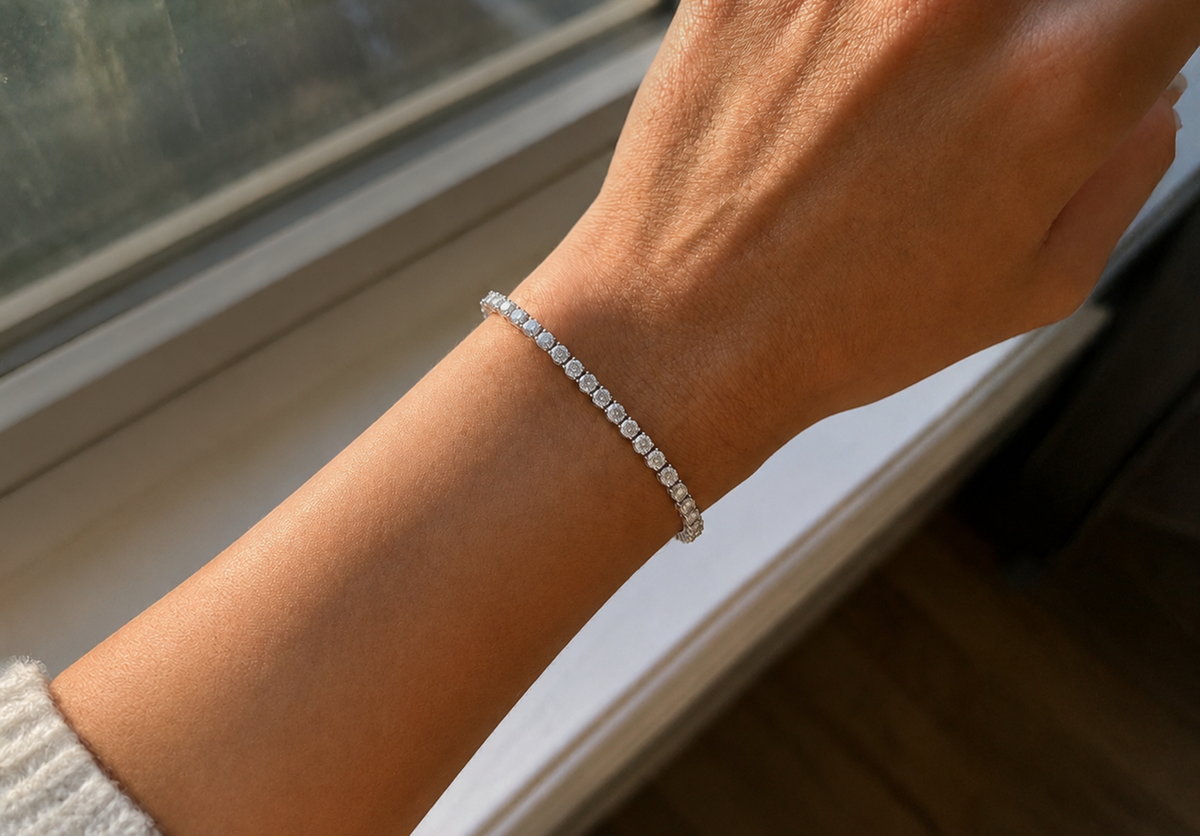
Lab Grown Diamond Tennis Bracelet vs Mined Diamond Tennis Bracelet: Is There Actually a Difference
If you put a lab grown diamond tennis bracelet next to a mined diamond tennis bracelet, a gemologist with the naked eye cannot tell you which is which. That is the starting point for this comparison, because it changes how the rest of the conversation goes.
The question most buyers actually want answered is whether they are getting something lesser. The short answer is no. Here is the longer one.
The diamonds themselves
Lab grown diamonds and mined diamonds share the same chemical composition: pure carbon arranged in a crystal structure. The hardness is identical (10 on the Mohs scale). The way they refract light is identical. The way they are graded is identical, using the same 4Cs scale: cut, color, clarity, and carat weight.
The GIA grades both. A D color, VVS1 clarity lab grown diamond and a D color, VVS1 clarity mined diamond are, by every measurable standard, the same stone. One grew in a lab over a few weeks. The other formed underground over billions of years. That is the full extent of the difference between them.
The price
This is where the two diverge significantly. A mined diamond tennis bracelet of 5 carats at a traditional retailer typically starts around $3,000 to $5,000. A lab grown diamond tennis bracelet of the same carat weight at Von Diamonds starts at $499.
That gap exists because of the supply chain, not the diamond. Mined diamonds pass through mining operations, export processes, cutters, wholesalers, and multiple levels of retail before reaching a buyer. Each step adds margin. Lab grown diamonds, particularly through a factory direct model, skip most of that. The savings go to the buyer.
The setting and construction
A tennis bracelet is a tennis bracelet regardless of what stone is in it. The quality of the setting, the clasp mechanism, and the craftsmanship are what determine how well it holds up over time. These factors are independent of whether the stones are lab grown or mined.
When comparing two bracelets, look at the clasp (a box clasp with a safety mechanism is standard for good reason), the prong setting (stones should sit flush and secure), and the overall finish. These details matter more for daily wear than the origin of the stone.
What about resale value?
Mined diamond jewelry has historically been positioned as holding value better than lab grown. In practice, the resale market for both has softened. Most jewelry bought at retail sells at a significant loss on the secondary market regardless of stone origin. Buying a tennis bracelet as a financial asset has never been a straightforward proposition for either category.
If the goal is a piece you will wear and enjoy, lab grown delivers the same experience at a fraction of the price. Von's 5 CTW tennis bracelet at $499 in sterling silver is the same diamond, the same sparkle, and the same daily wearability as a mined diamond bracelet that costs several times more.
The practical question
Most buyers asking this question are weighing whether they can justify paying more for a mined diamond. The honest framing is the reverse: what does paying more actually get you. The stone is the same. The look is the same. The durability is the same. What changes is the number on the price tag and the supply chain that produced it.
For a piece you plan to wear every day, that math tends to land clearly in one direction.
FAQ
Can jewelers tell the difference between lab grown and mined diamond tennis bracelets?
Not with the naked eye. Specialized equipment can identify the growth origin of a stone, but visually and physically the diamonds are identical.
Are lab grown diamond tennis bracelets lower quality?
No. Lab grown diamonds meet the same grading standards as mined diamonds. Quality is determined by cut, color, clarity, and carat weight, not by how the diamond was created.
Why is a lab grown diamond tennis bracelet so much cheaper?
The price difference reflects the supply chain. Lab grown diamonds bypass mining, export, and multi-tier retail markups. Factory direct pricing removes additional margin on top of that.
Will a lab grown diamond tennis bracelet hold its value?
Both lab grown and mined diamond jewelry typically sell at a loss on the secondary market. Neither is a reliable financial investment. The value is in wearing and enjoying the piece.
What should I look for in a tennis bracelet regardless of stone origin?
Focus on the clasp security, the prong setting, and the overall finish. A box clasp with a safety mechanism is standard for quality tennis bracelets. These construction details determine how well the bracelet holds up over time.


Leave a comment
This site is protected by hCaptcha and the hCaptcha Privacy Policy and Terms of Service apply.